Signs that may indicate an infestation
Distinguish visible nests, repeated flights into an opening and occasional insect visits. Observe from a normally accessible place; this alone does not confirm species or the whole nest's location.

Wasps and hornets · Prague and surrounding areas
A nest by the roof, in a cavity or increased insect activity. Describe location and what is visible from a normally accessible place.
Identification and context
Distinguish visible nests, repeated flights into an opening and occasional insect visits. Observe from a normally accessible place; this alone does not confirm species or the whole nest's location.
A nest near a used entrance or window differs from activity far from people. The main reason for contacting us is conflict between pest location and property use.
Signs of infestation
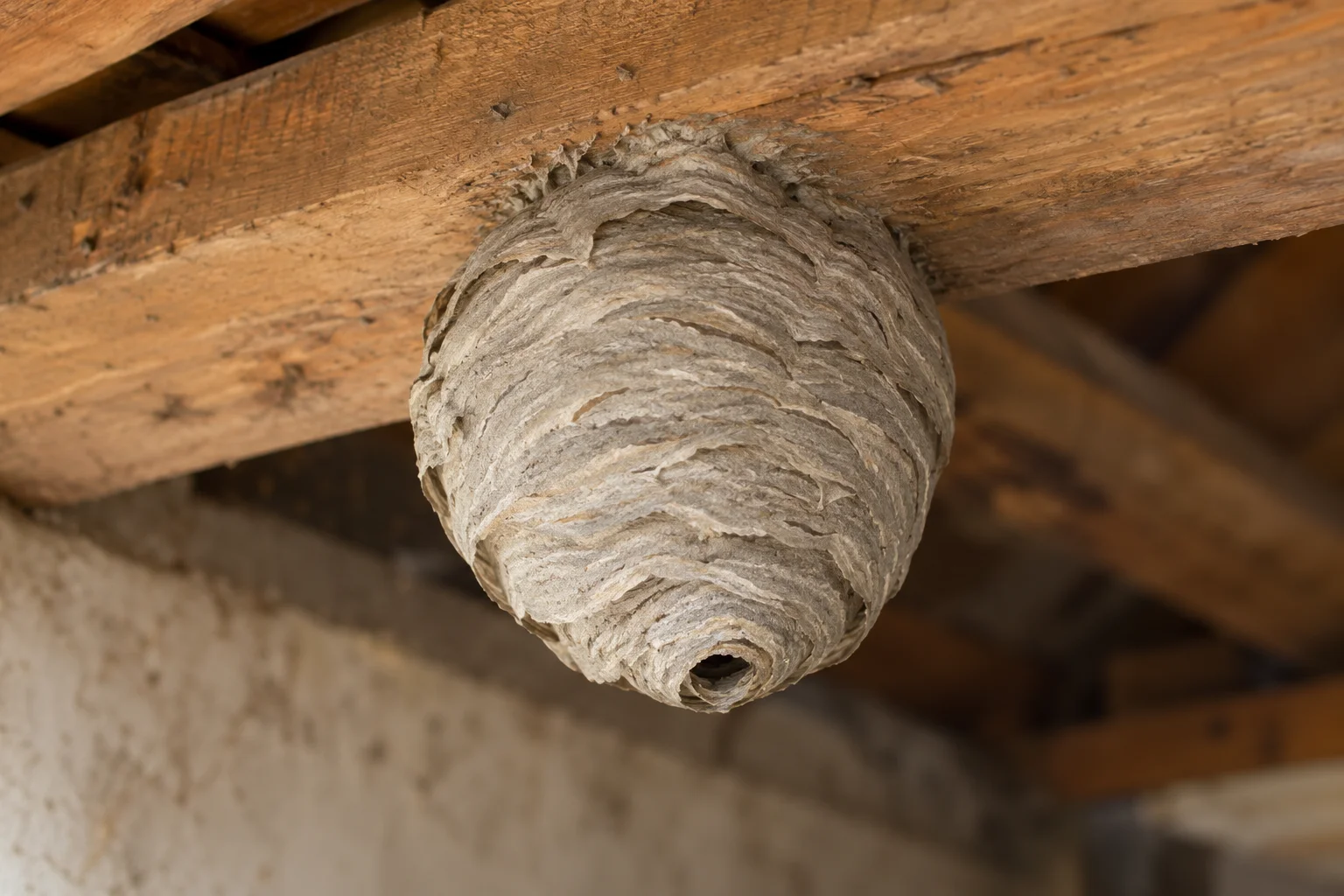
A nest may be visible or hidden in a cavity. Observe repeated flights from a safe distance; do not open up the entrance yourself.
Enlarge image ↗Identification references: UC IPM: social wasps, nests and activity factors. General guidance does not replace identifying the actual finding.
Process and follow-up
First we check location, height, access and surrounding activity. Only then can feasibility and scope be confirmed. We do not automatically treat bees or other insects as wasps.
Follow-up depends on nest access, treatment and subsequent activity. Without knowing the location, we do not promise every nest can be removed in one visit.
Instructions for the specific work determine reuse and any checks. Report new activity by time and location without trying to access the nest yourself.
How to address recurring causes →Species for orientation
You do not have to identify the species yourself. Images are not to the same scale. Your actual finding and its description help us assess the situation.
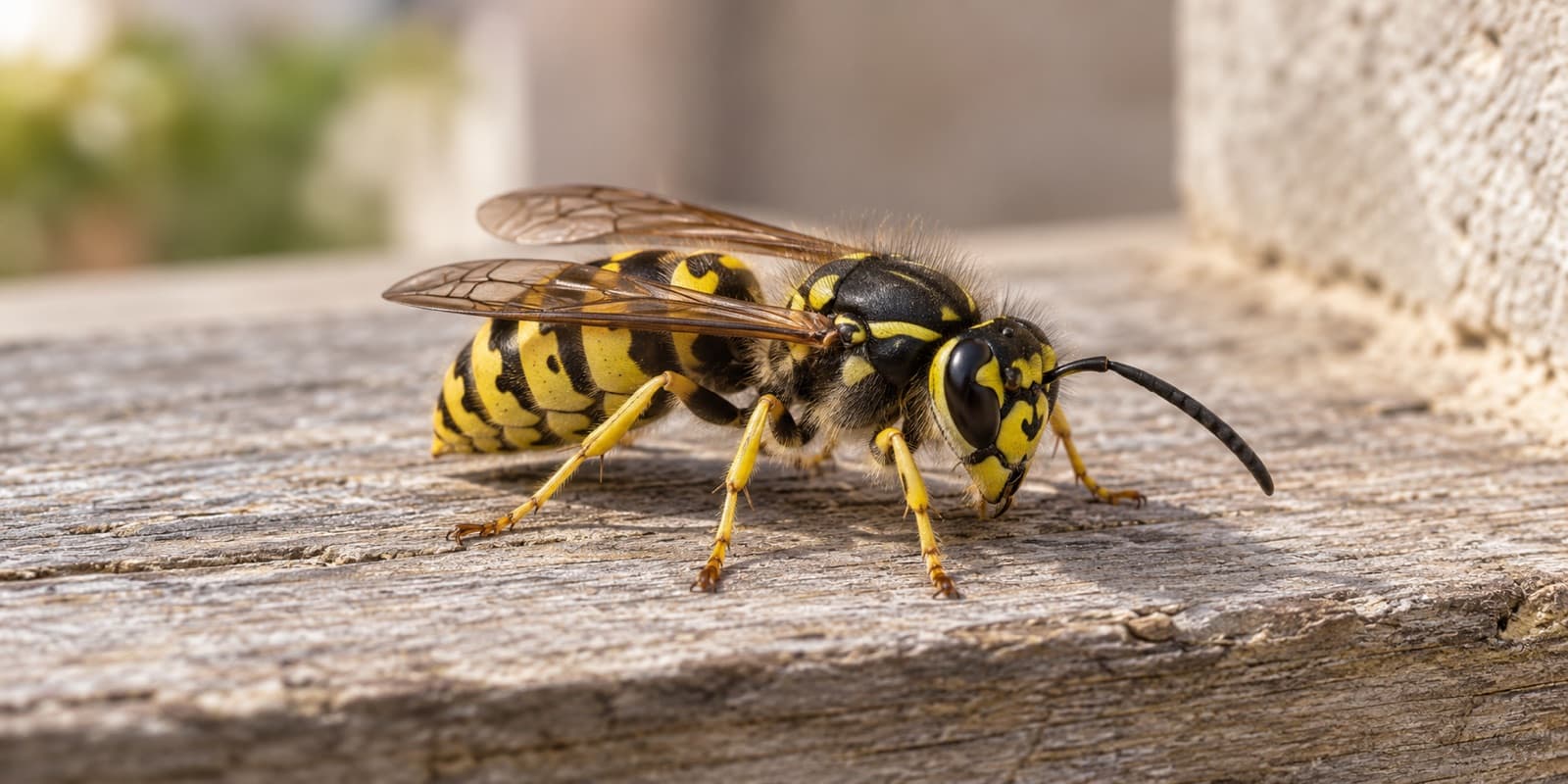
A yellow-and-black wasp. It looks very similar to the German wasp; you needn't identify the species yourself.
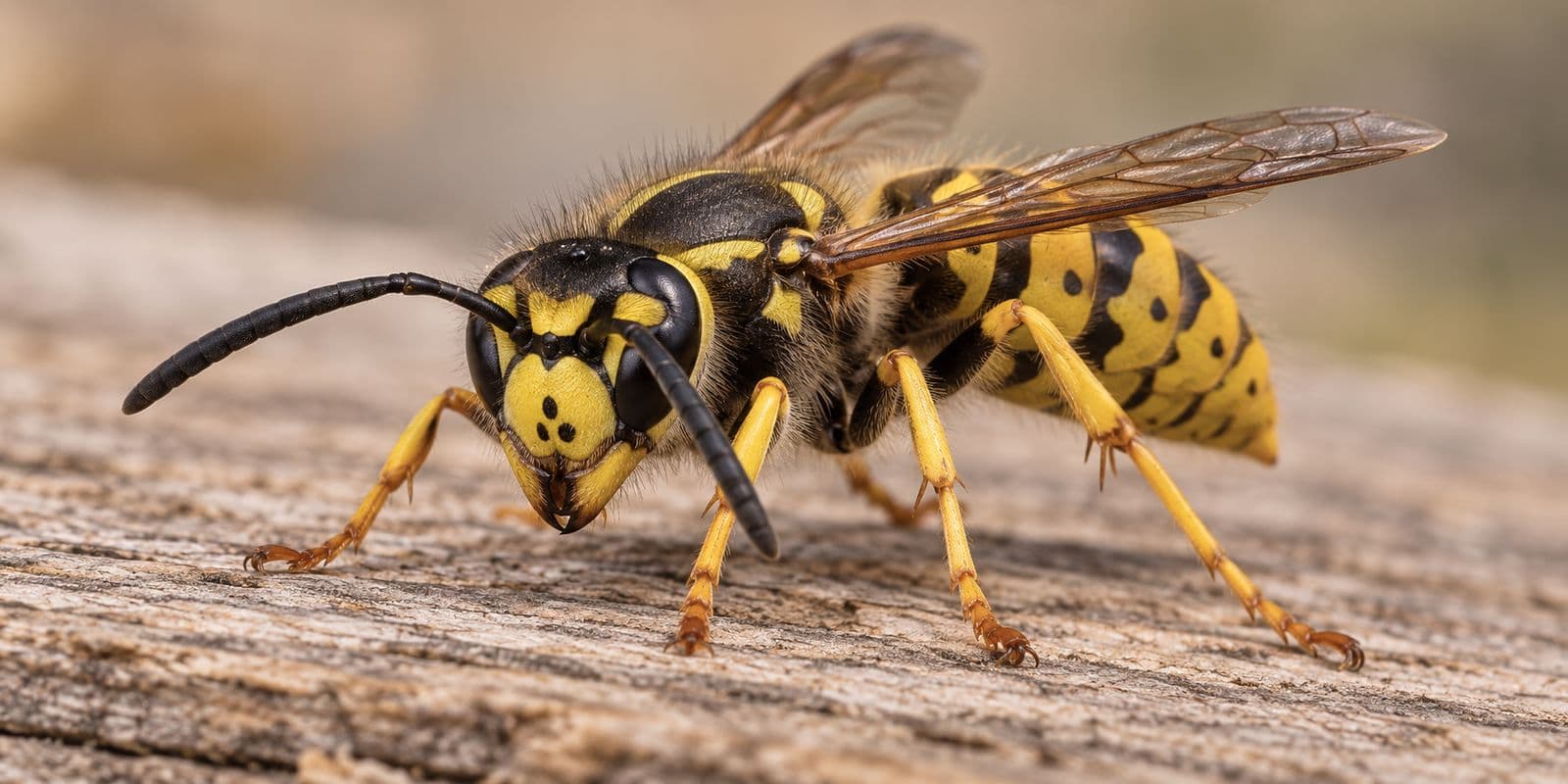
Another yellow-and-black wasp species found near buildings and in gardens.
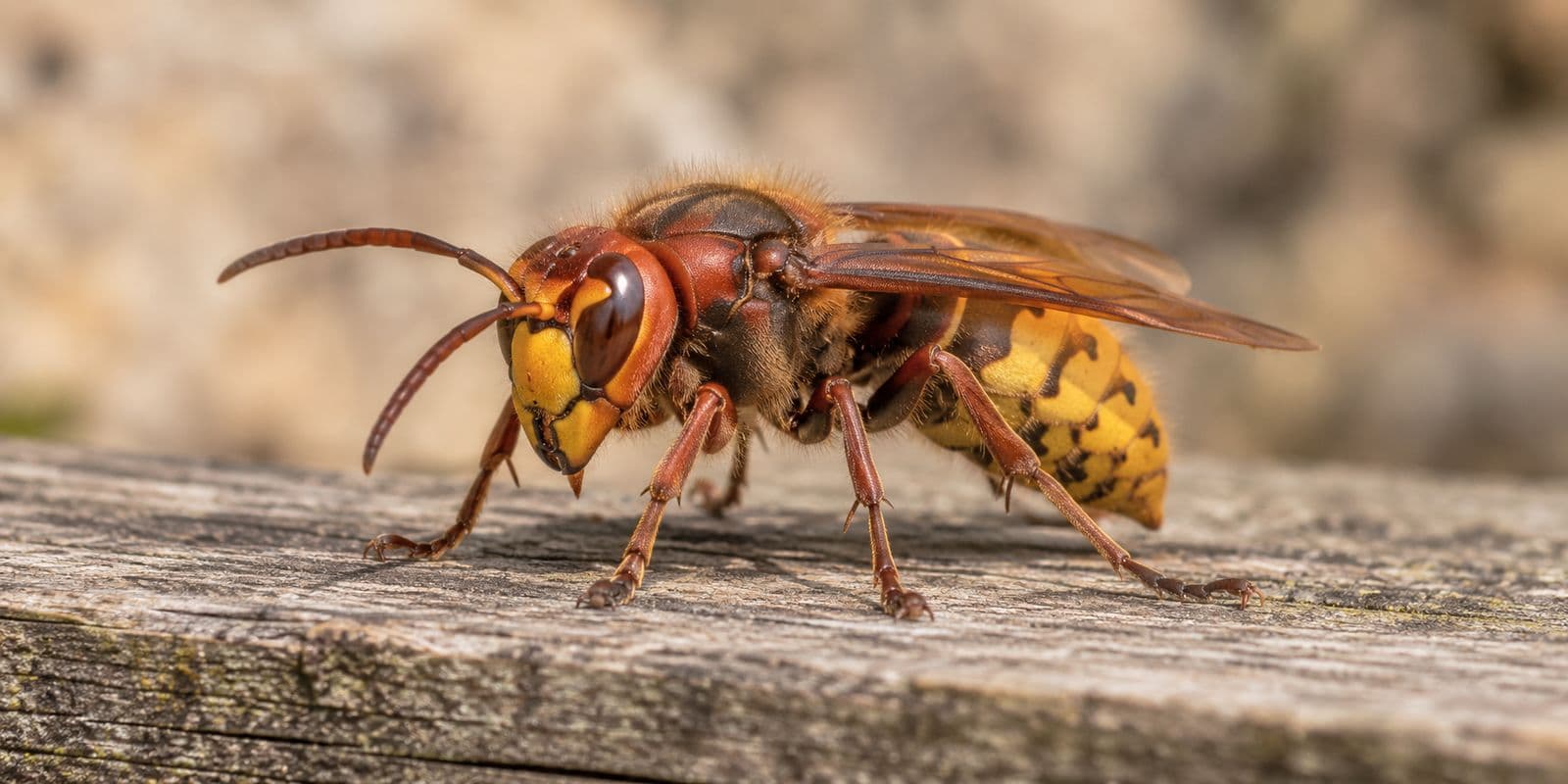
Larger body, reddish-brown head and thorax, yellow abdomen with dark markings.
For our first conversation
Tell us whether you see a nest, an opening with insects entering or only activity. Give approximate height and access. Do not expose a nest or dismantle structures yourself for an enquiry.
We confirm the visit, scope, price and date with you in advance.
Your description helps us determine what is needed for assessment and whether a visit can be arranged. Difficult access, height or enclosed structures affect procedure and feasibility. We confirm scope and conditions in advance.
How booking and visits work →Price based on your situation
At first contact, we clarify the problem. On site, we verify the scope and agree the approach and price before treatment.
“Wasp nest” alone is not enough to price the work. Location, access, procedure, scope and travel matter. We clarify price and inclusions before agreeing the work.
How we determine the price →Frequently asked questions
We first assess the nest location, access and risks to the surroundings. We then select a safe professional approach and a way to check the result. Do not dismantle the nest or expose it yourself just to arrange a visit.
An enquiry can include suspected wasps or hornets. We clarify identification and feasibility according to location, access and assessment.
You can call any time, but visits and dates are confirmed individually. Phone contact 24/7 does not promise an immediate call-out.
We confirm price after clarifying location, access and scope. Height and accessibility are especially important. We do not assume a fixed price without this information.
List affected places, duration and products previously used. Mention children, animals, room use, stock and sensitive equipment. Arrange access. Moving items, washing or cleaning treated areas should follow specific instructions rather than a universal checklist.
You receive a record of findings and work with instructions and agreed follow-up.
Conditions must match the method, premises and any product. Before starting, we confirm people and animal access, food and equipment protection and other restrictions. We cannot honestly promise “completely harmless” treatment without knowing these conditions.
There is no single waiting time for every service. Specific instructions state when the premises can be used, whether ventilation is needed and which surfaces can be cleaned. These relate to the actual procedure; we give no universal time promise.
Tell us the date, place and change since the previous visit. We follow up on its findings and recommendations.