Signs that may indicate an infestation
Repeated sounds, droppings, chewed packaging, damage or sightings may indicate rodents. One sign alone does not determine species or animal numbers. Location and recurrence matter.

Mice, brown rats and black rats · Prague and surrounding areas
Sounds, droppings, damage or repeated rodent sightings. Tell us what you noticed; we clarify species and scope during assessment.
Identification and context
Repeated sounds, droppings, chewed packaging, damage or sightings may indicate rodents. One sign alone does not determine species or animal numbers. Location and recurrence matter.
Rodents can damage stock and equipment. Alongside current activity, food access and possible entry points must be addressed or the situation may recur.
Signs of infestation
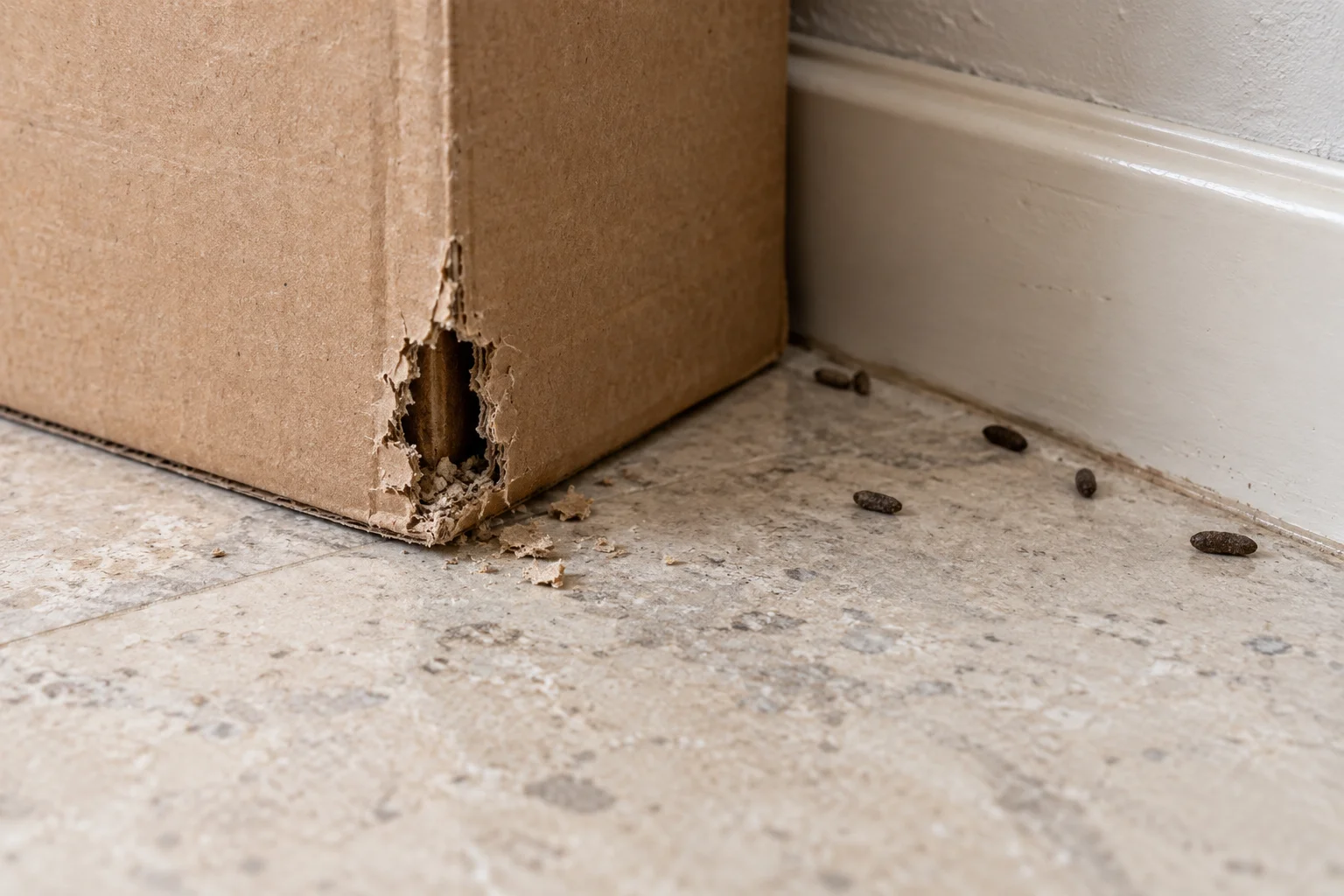
Damaged packaging and recurring traces along walls may indicate rodents. One sign cannot establish their species or number.
Enlarge image ↗Identification references: UC IPM: rodent signs and prevention. General guidance does not replace identifying the actual finding.
Process and follow-up
We relate findings to property use and entry routes. Apartments, basements, warehouses and outdoor areas may need different scopes. Placement and inspection of any devices are agreed in advance.
Check numbers depend on activity, procedure and removal of recurring causes. The offer distinguishes treatment, follow-up checks and any regular monitoring.
Watch for new findings and agreed inspection points. Do not move devices without agreement. Entry repairs, storage and waste are included in property-specific recommendations.
How to address recurring causes →Species for orientation
You do not have to identify the species yourself. Images are not to the same scale. Your actual finding and its description help us assess the situation.
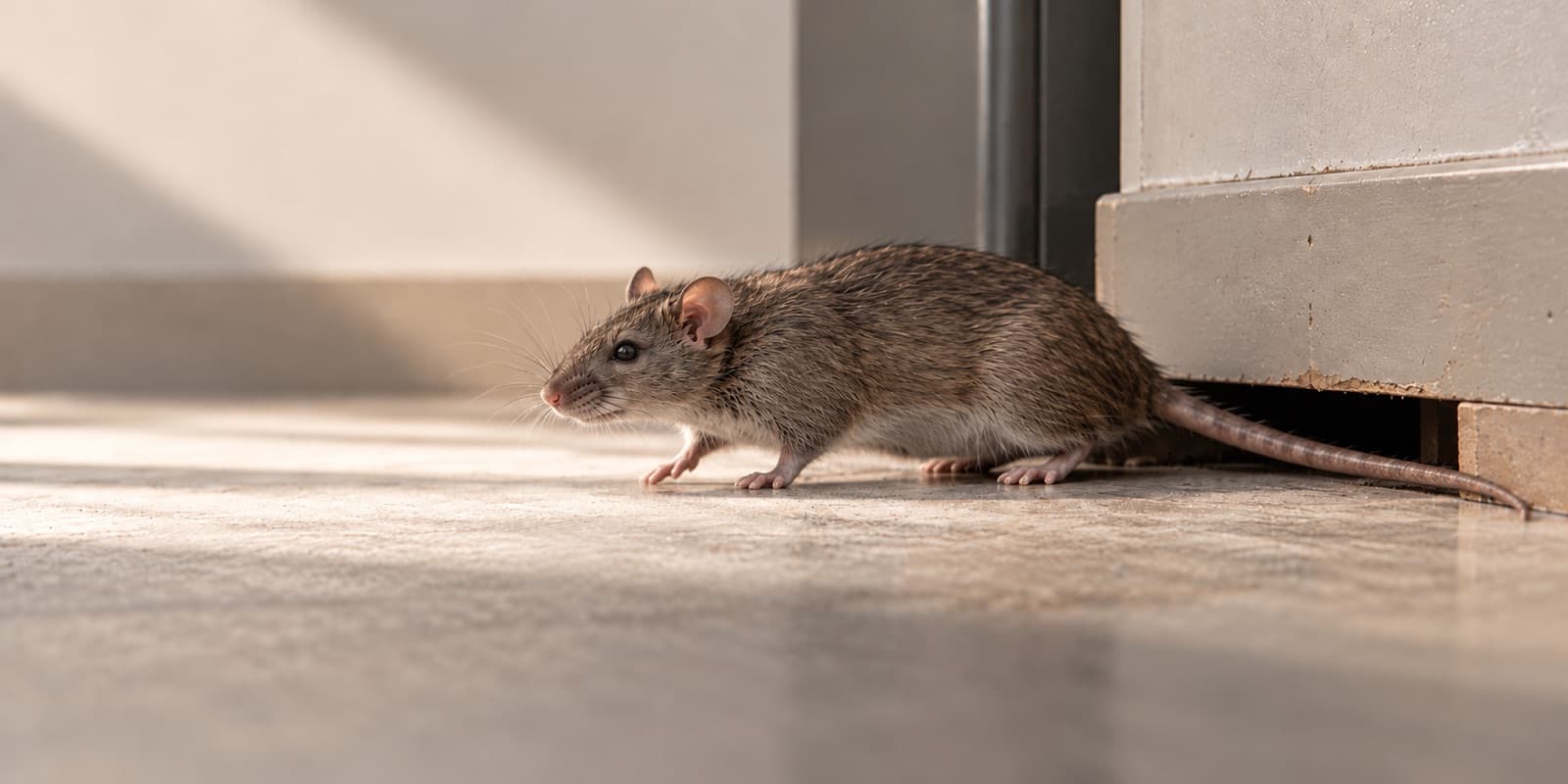
Robust body and larger head. Rodent images are not to the same scale.
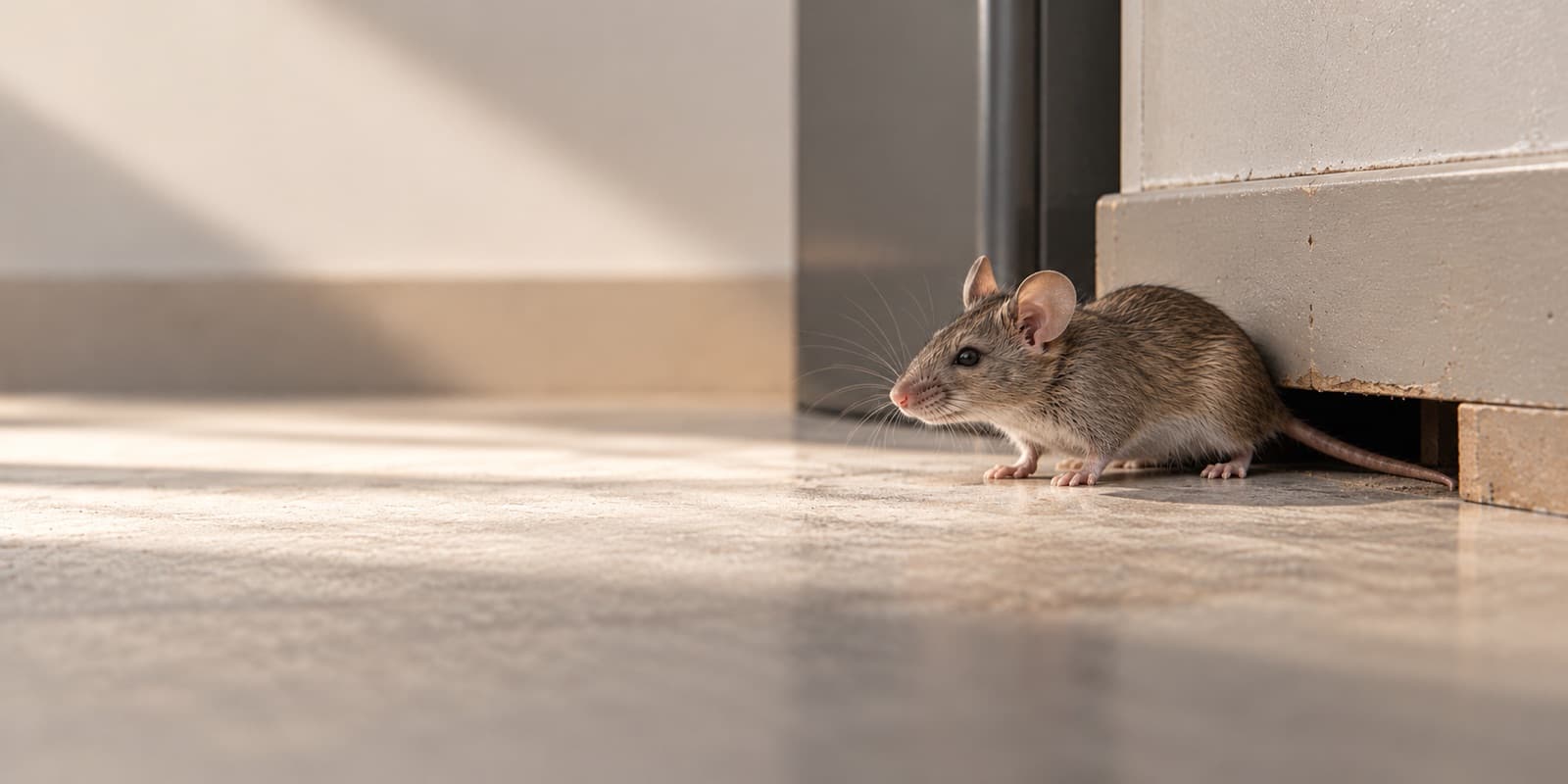
A smaller rodent with a more pointed snout and relatively prominent ears.
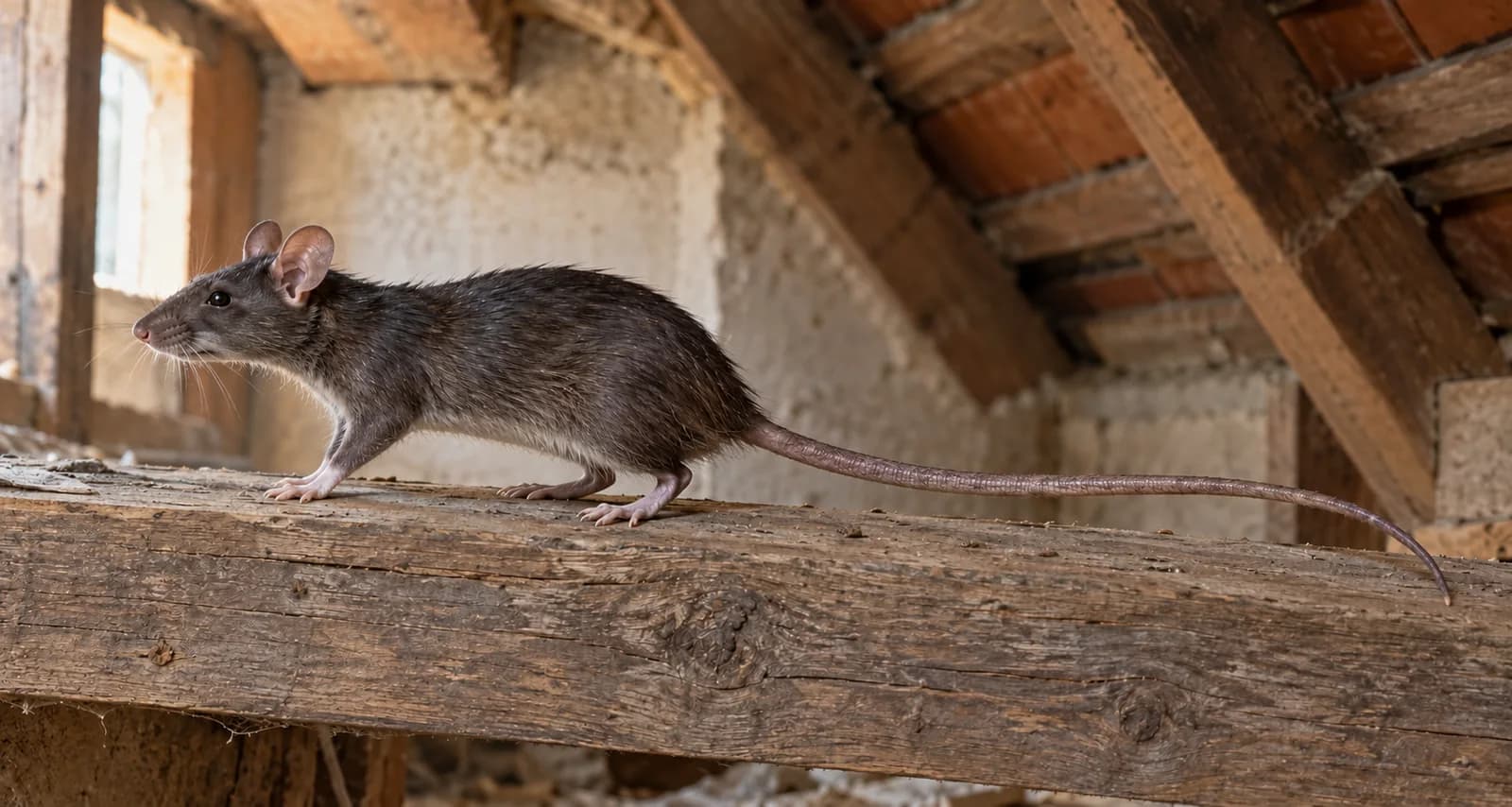
Slimmer than the brown rat, with larger ears and a thin tail longer than the head and body combined. Colour alone does not identify the species.
For our first conversation
Tell us whether it is a single finding or repeated activity and whether basements, storage or shared areas are affected. For buildings, a manager or someone who can provide access is helpful.
We confirm the visit, scope, price and date with you in advance.
Before starting, we confirm areas and approach. Assessment clarifies risk points and entry routes to consider. Further checks depend on the specific situation.
How booking and visits work →Price based on your situation
At first contact, we clarify the problem. On site, we verify the scope and agree the approach and price before treatment.
Layout, access, activity, approach, materials, visits and travel affect the price. An apartment and a group of basements may therefore cost differently. We confirm scope and price in advance.
How we determine the price →Frequently asked questions
We first identify the species, active areas and entry routes. Depending on the findings, we choose traps or other suitable measures and recommend reducing food sources and securing entry points. The plan includes checks of activity and treatment effectiveness.
The black rat has a slimmer body, larger ears and a thin tail longer than its head and body combined. The brown rat is more robust and usually has a shorter tail. Colour alone is not enough for identification. Describe the finding and location; we clarify the species during assessment.
Yes. Tell us which areas are affected and a manager or person who can provide access. Scope and coordination with other areas are agreed individually.
The pest name alone cannot determine the price. We need the location, scope and access. The offer clarifies what is included, including travel and any further visit.
List affected places, duration and products previously used. Mention children, animals, room use, stock and sensitive equipment. Arrange access. Moving items, washing or cleaning treated areas should follow specific instructions rather than a universal checklist.
You receive a record of findings and work with instructions and agreed follow-up.
Conditions must match the method, premises and any product. Before starting, we confirm people and animal access, food and equipment protection and other restrictions. We cannot honestly promise “completely harmless” treatment without knowing these conditions.
There is no single waiting time for every service. Specific instructions state when the premises can be used, whether ventilation is needed and which surfaces can be cleaned. These relate to the actual procedure; we give no universal time promise.
Tell us the date, place and change since the previous visit. We follow up on its findings and recommendations.