Signs that may indicate an infestation
Repeated trails to food or water help locate activity. Colour or size alone cannot reliably identify the species. A finding at one window differs from activity in several apartments.

Ants · Prague and surrounding areas
Repeatedly seeing them by counters, windows or in other rooms? Tell us where and for how long. We will agree the next step.
Identification and context
Repeated trails to food or water help locate activity. Colour or size alone cannot reliably identify the species. A finding at one window differs from activity in several apartments.
Recurring activity may relate to food, water and entry points. Solutions should address species and cause rather than only removing visible individuals.
Signs of infestation
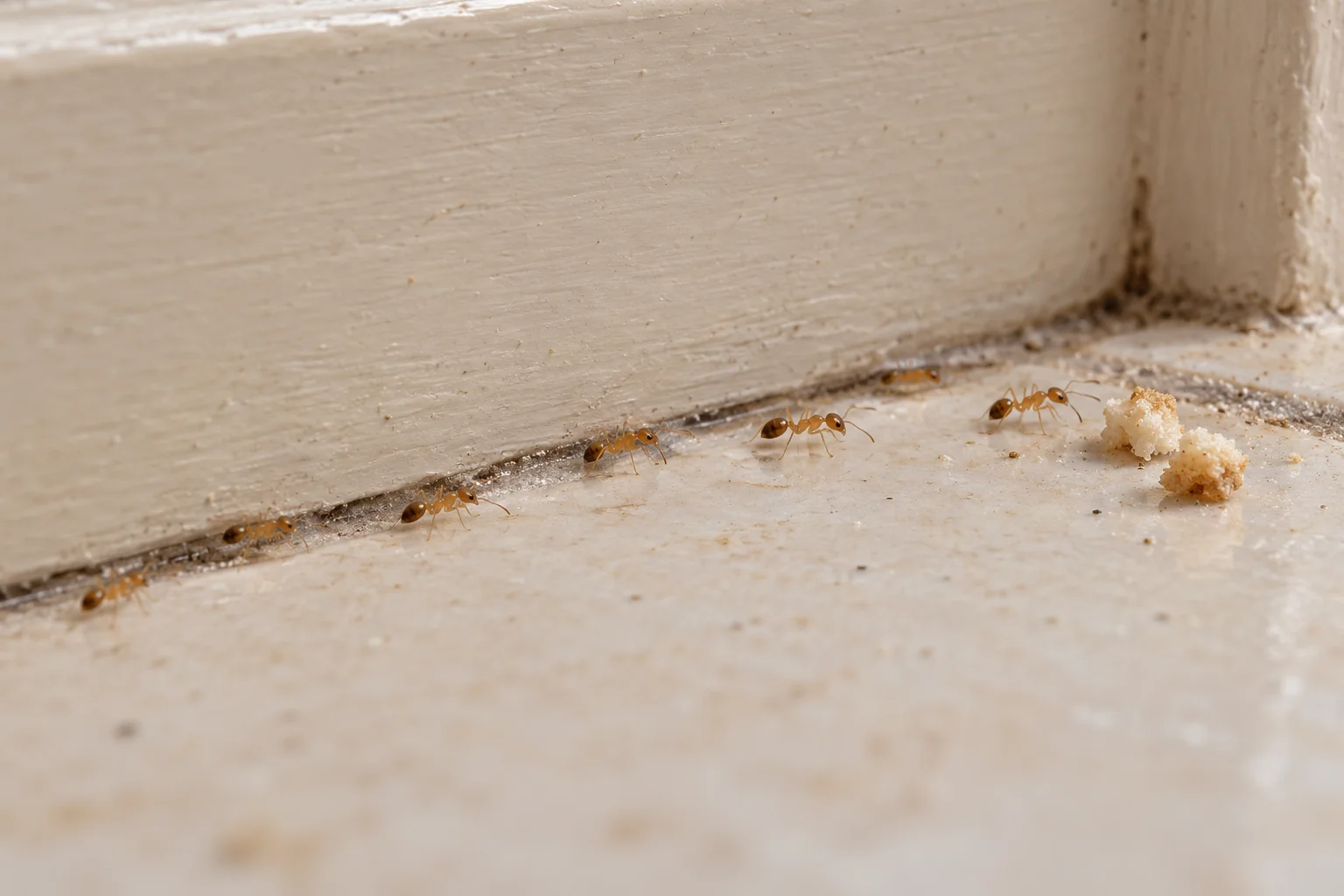
Pharaoh-ant nests are usually concealed. Describing a regular trail to food is more useful for arranging help than looking for a visible anthill.
Enlarge image ↗Identification references: UC IPM: ants and causes of recurrence. General guidance does not replace identifying the actual finding.
Process and follow-up
We clarify movement routes, affected rooms and earlier products. Shared building activity needs coordination so measures work together.
Follow-up depends on species, activity and results. We confirm in advance how changes will be assessed and when a check makes sense.
Record changes in trails and new locations. Keep food sealed. Coordinate additional products and cleaning of treated areas with the agreed approach.
How to address recurring causes →Species for orientation
You do not have to identify the species yourself. Images are not to the same scale. Your actual finding and its description help us assess the situation.
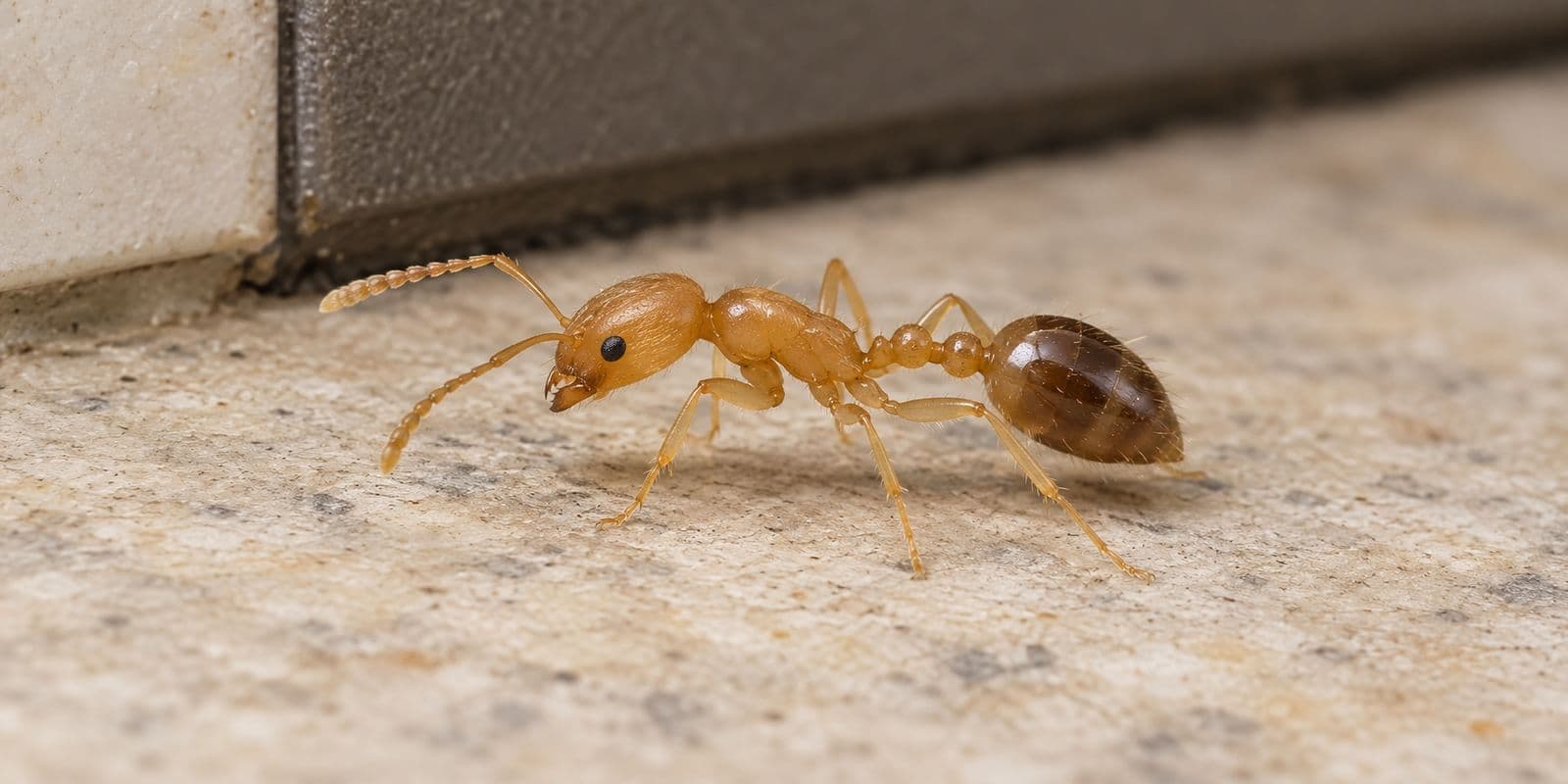
A small yellow-brown ant that can settle inside heated buildings.
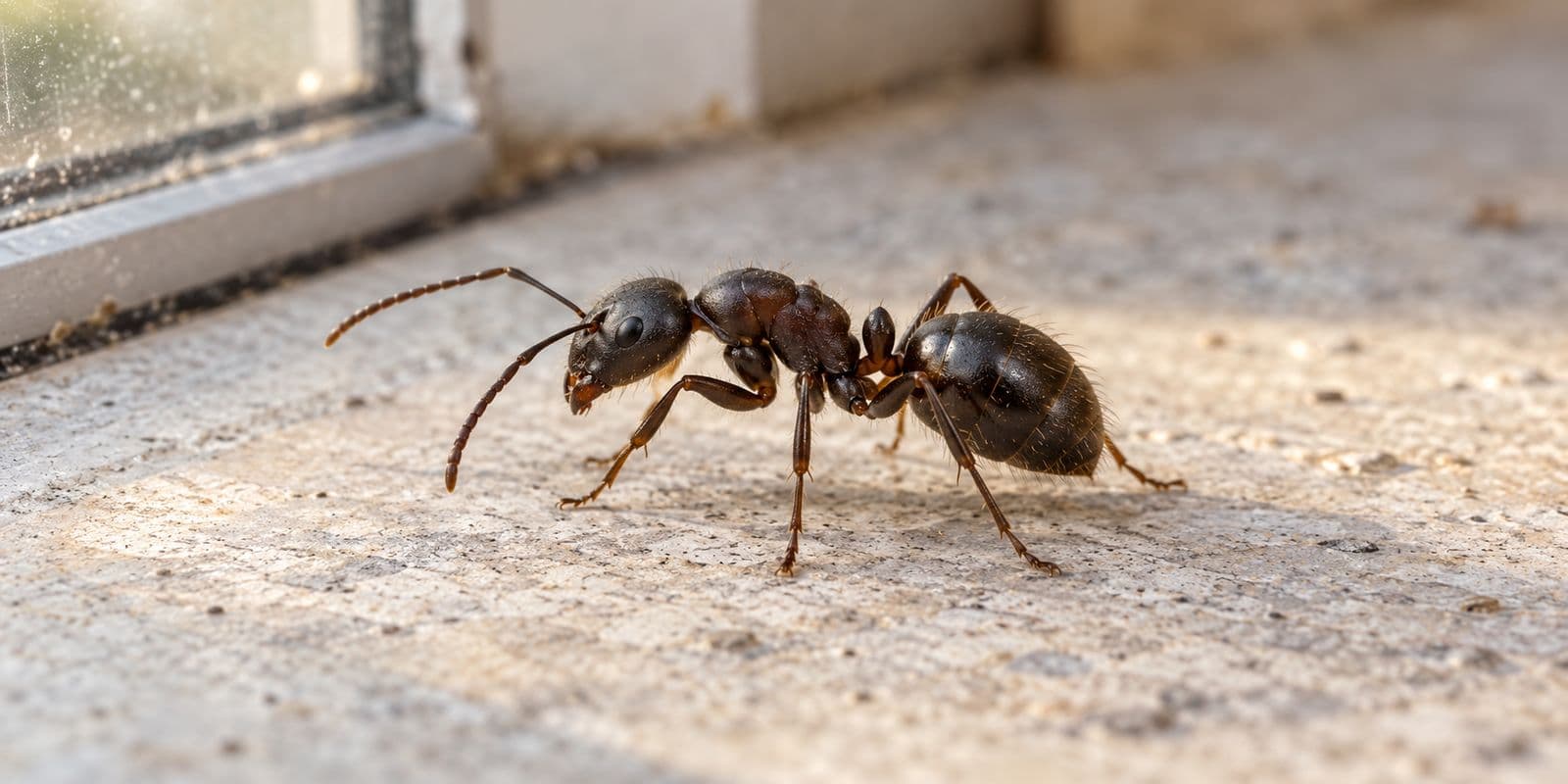
A dark ant from gardens and around buildings; it may enter in search of food.
For our first conversation
Describe locations, trails, duration and previous attempts. For buildings, include shared areas and access contact; for businesses, use and time restrictions.
We confirm the visit, scope, price and date with you in advance.
First we clarify the problem and areas. Then we confirm coordination, preparation, date and any checks. “Ants” alone does not determine a product or visit numbers.
How booking and visits work →Price based on your situation
At first contact, we clarify the problem. On site, we verify the scope and agree the approach and price before treatment.
Scope, layout, use, access, procedure, materials and travel matter for the offer. In buildings with multiple affected areas, we confirm inclusions and coordination.
How we determine the price →Frequently asked questions
The approach depends on the species and extent of the infestation. For pharaoh ants, we target the colony; unsuitable spraying can disperse it and spread the problem. Reducing food sources and checking for further activity are part of the approach.
Tell us what was used or done, when and where. Changes in activity and recurring locations also help. We agree next steps based on this information and assessment.
Yes, you can describe the situation. If shared areas or access to other parts are involved, we clarify manager coordination. We confirm the customer and scope in advance.
Tell us at first contact. Preparation and use conditions depend on the assessed situation and chosen procedure; we do not give universal instructions without knowing the solution.
List affected places, duration and products previously used. Mention children, animals, room use, stock and sensitive equipment. Arrange access. Moving items, washing or cleaning treated areas should follow specific instructions rather than a universal checklist.
You receive a record of findings and work with instructions and agreed follow-up.
Conditions must match the method, premises and any product. Before starting, we confirm people and animal access, food and equipment protection and other restrictions. We cannot honestly promise “completely harmless” treatment without knowing these conditions.
There is no single waiting time for every service. Specific instructions state when the premises can be used, whether ventilation is needed and which surfaces can be cleaned. These relate to the actual procedure; we give no universal time promise.
Tell us the date, place and change since the previous visit. We follow up on its findings and recommendations.