Signs that may indicate an infestation
Near food, look for larvae, fine webbing in stock and flying moths. In textiles, look for larvae and material damage. Food and clothes moths require different source assessments.

Moths · Prague and surrounding areas
Tell us where findings occur and what they affect. The difference between kitchens, wardrobes and warehouses matters.
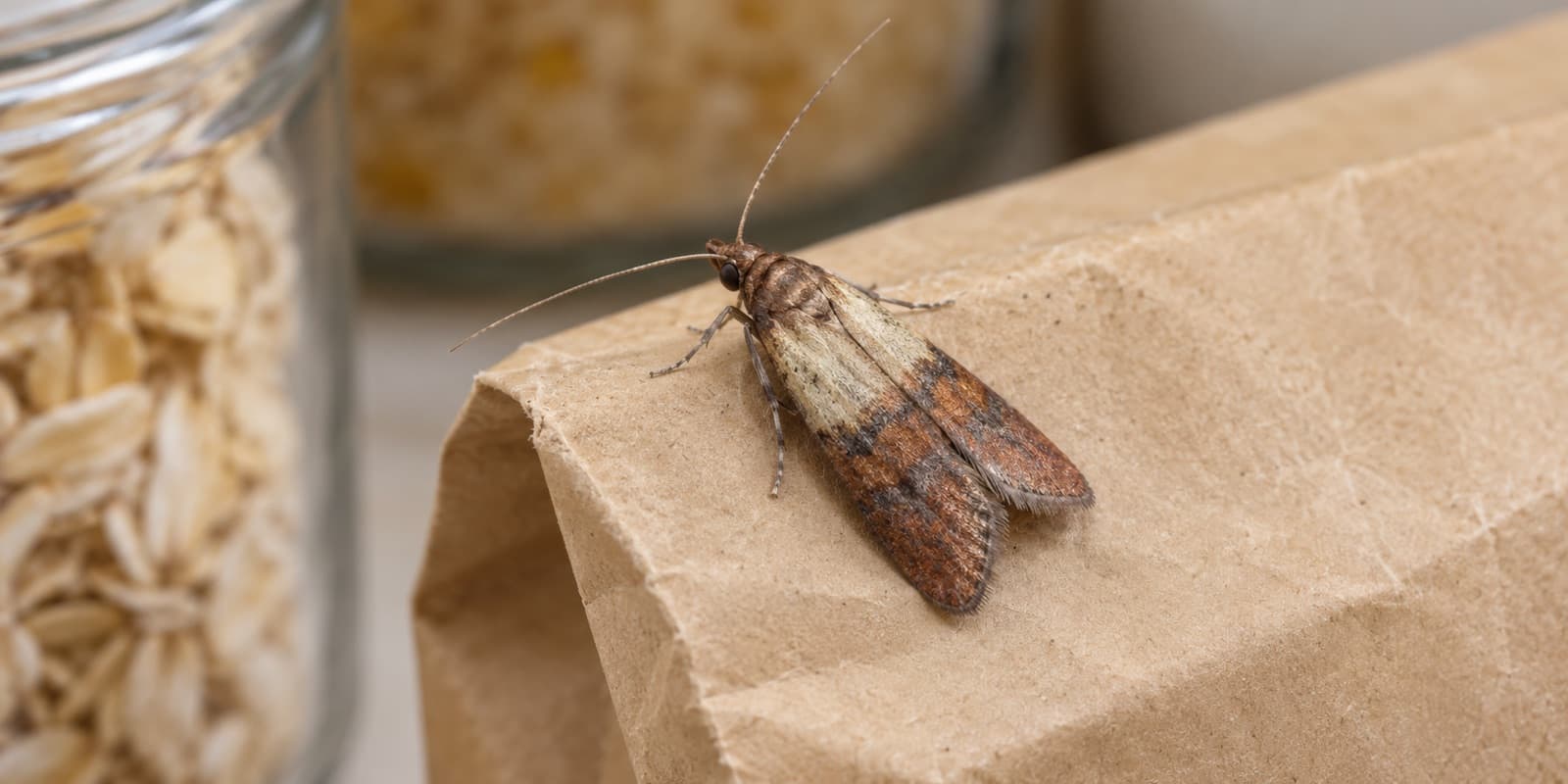
Identification and context
Near food, look for larvae, fine webbing in stock and flying moths. In textiles, look for larvae and material damage. Food and clothes moths require different source assessments.
Flying adults are only part of the problem: larvae damage food and textiles. Without finding the source, activity may recur after visible insects are removed.
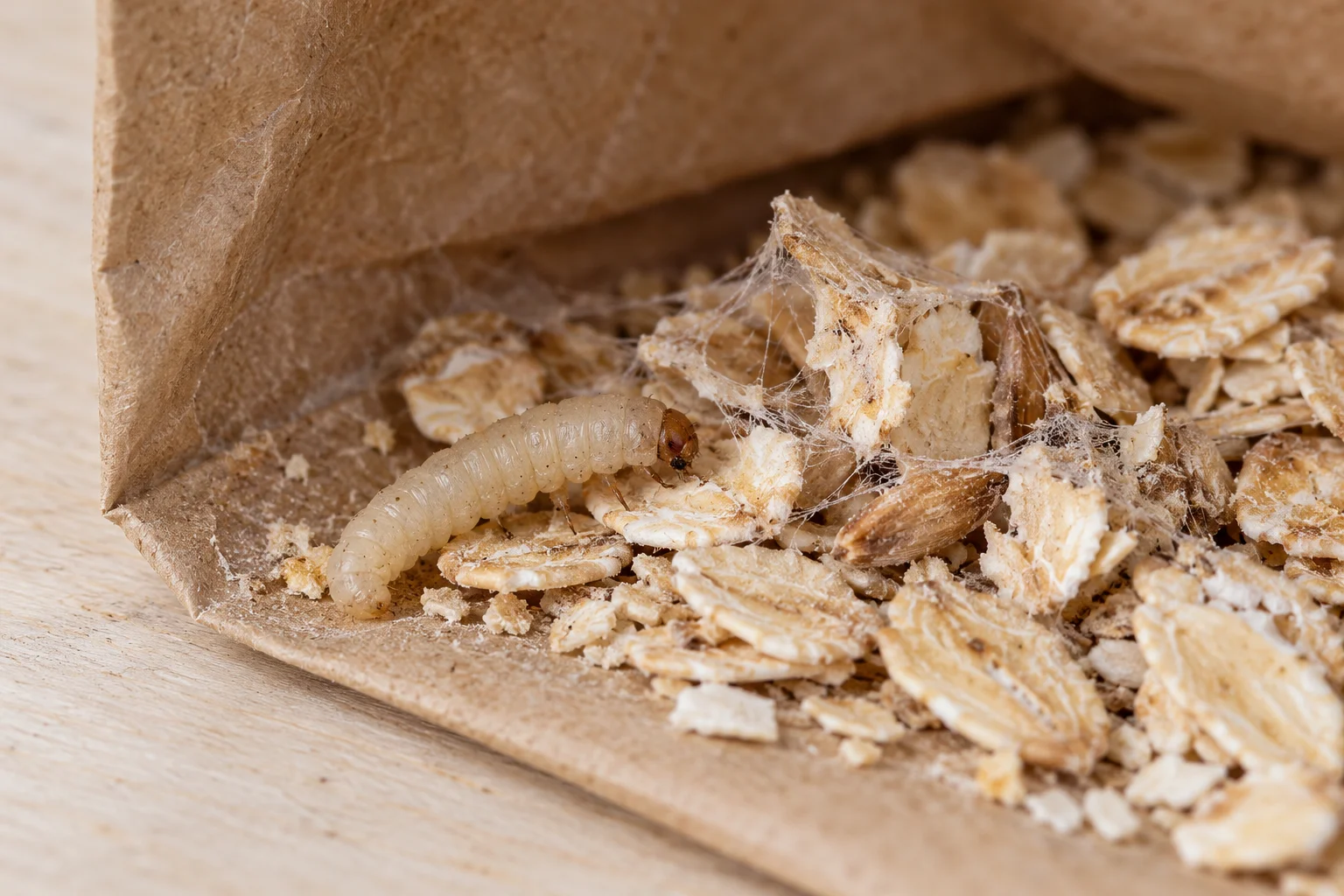
Signs of infestation
Larvae can bind stored food with fine silk. This example shows pantry moth signs; textile damage is assessed separately.
Enlarge image ↗Identification references: UC IPM: stored food pests · UC IPM: clothes moths. General guidance does not replace identifying the actual finding.
Process and follow-up
We distinguish findings in food, textiles and stock. Assessment focuses on the source, surrounding material and extent. Chemical treatment is not automatically the first or only option.
Follow-up depends on source removal and new findings. Regular monitoring may suit warehouses, but a single trap alone does not address infested stock.
Watch for new findings in specific food or textiles. The agreed approach covers the source, storage and follow-up. Record finding locations separately from simple counts of flying moths.
How to address recurring causes →Species for orientation
You do not have to identify the species yourself. Images are not to the same scale. Your actual finding and its description help us assess the situation.
A food pest. Forewings have pale and reddish-brown sections.
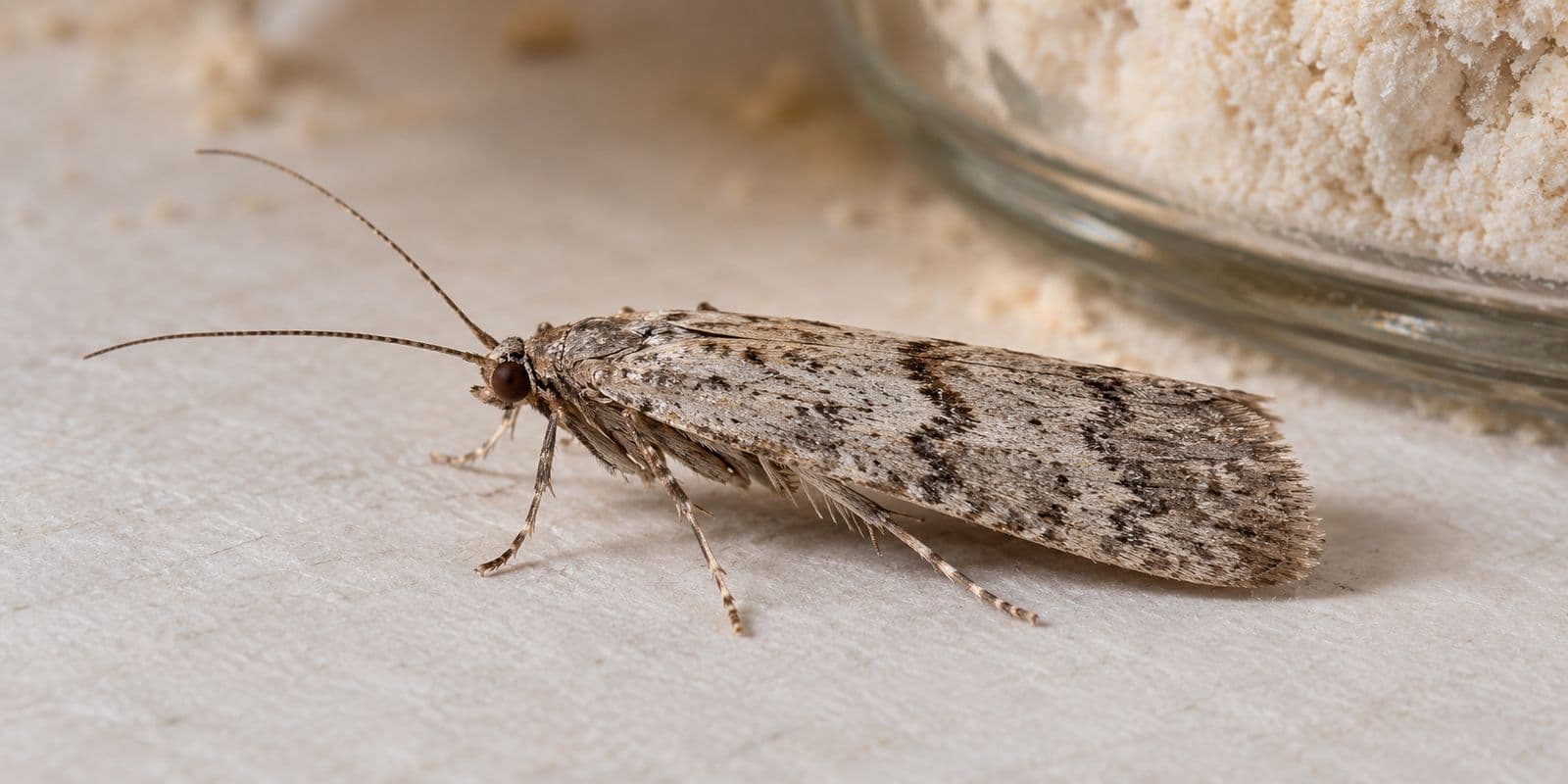
A food pest. Forewings are mainly grey with dark markings.
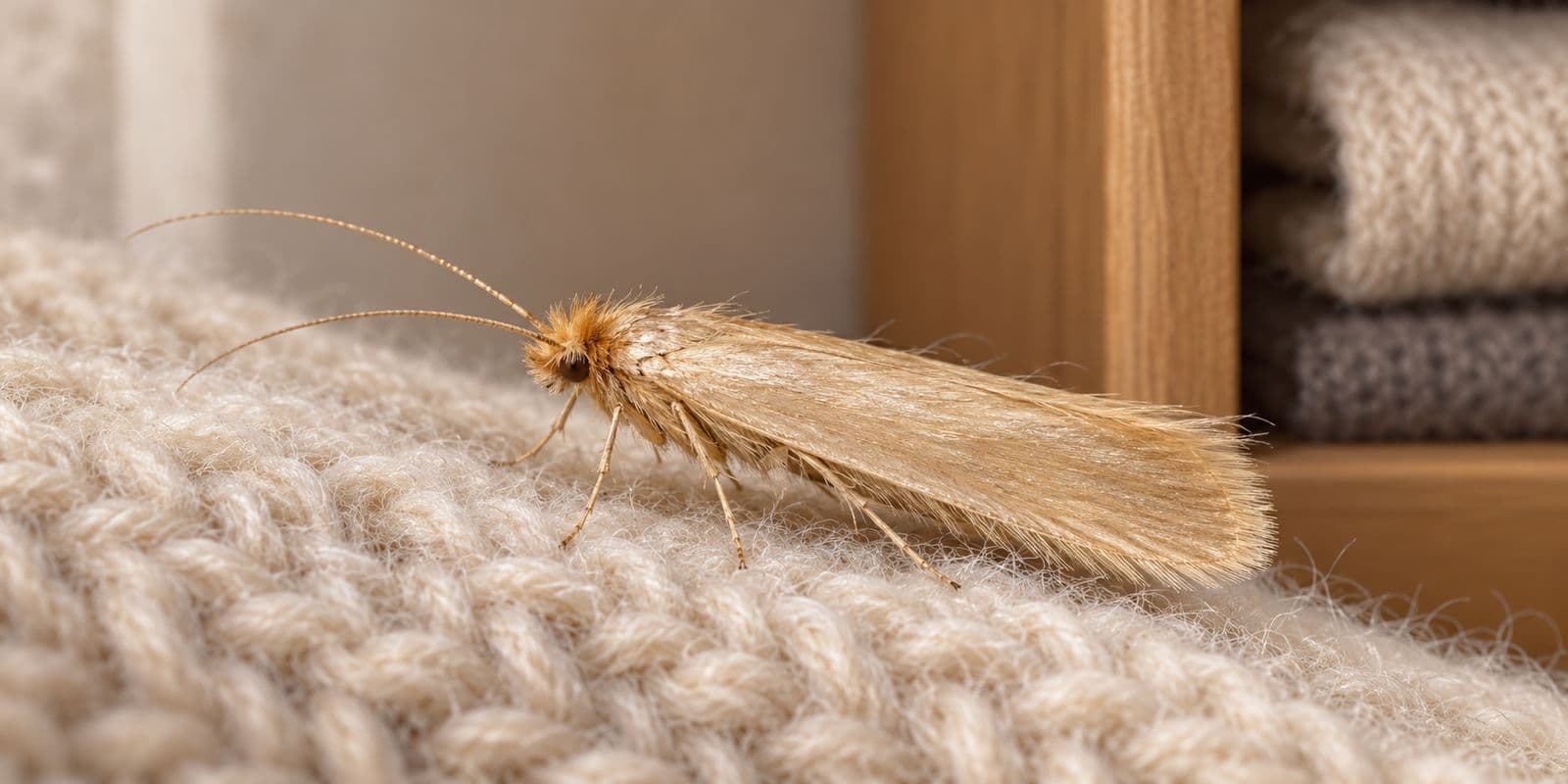
A textile pest. Pale golden wings without prominent spots.
For our first conversation
Describe locations and links to food, textiles or stock. Warehouses should include affected sections and access; total floor area alone is not enough. Include prior attempts.
We confirm the visit, scope, price and date with you in advance.
First we clarify the problem and affected areas. Then we agree the procedure, coordination and any checks. We do not set preparation or stock handling without knowing the situation.
How booking and visits work →Price based on your situation
At first contact, we clarify the problem. On site, we verify the scope and agree the approach and price before treatment.
Affected rooms or warehouse sections, layout, access, procedure, materials, further visits and travel determine the price. One cupboard and a commercial warehouse need different scope assessments.
How we determine the price →Frequently asked questions
The key is to find and remove infested supplies, inspect nearby packages and clean shelves and crevices. Store food in sealed containers afterwards. A pheromone trap helps monitor activity, but does not replace removing the source.
We look for infested textiles and larvae. The approach includes separating affected items, cleaning them in a way suitable for the material and checking for further signs. A trap can help with monitoring, but does not replace treating infested textiles.
Yes. Describe use, stock type, affected areas and operating time restrictions. We agree feasibility, coordination and scope for the specific situation.
We confirm preparation after clarifying the problem and approach. Observations and prior work are enough for first contact; we do not publish a universal guide for all findings.
List affected places, duration and products previously used. Mention children, animals, room use, stock and sensitive equipment. Arrange access. Moving items, washing or cleaning treated areas should follow specific instructions rather than a universal checklist.
You receive a record of findings and work with instructions and agreed follow-up.
Conditions must match the method, premises and any product. Before starting, we confirm people and animal access, food and equipment protection and other restrictions. We cannot honestly promise “completely harmless” treatment without knowing these conditions.
There is no single waiting time for every service. Specific instructions state when the premises can be used, whether ventilation is needed and which surfaces can be cleaned. These relate to the actual procedure; we give no universal time promise.
Tell us the date, place and change since the previous visit. We follow up on its findings and recommendations.